
The Recently Popularized Mongolian Food: ᠥᠷᠦᠮᠡ
Recently, a trend on Douyin has popularized the use of the traditional Mongolian dairy product ᠥᠷᠦᠮᠡ (urum) in yogurt based drinks and desserts. This combination quickly spread across Chinese social media platforms, leading cafés and restaurants to incorporate urum into a variety of sweet dishes. Despite its rapid commercialization, public understanding of how urum is traditionally produced and consumed in Inner Mongolia remains limited.

Urum is a dairy product commonly referred to as milk skin or lactoderm. It forms naturally when fresh milk is gently heated and then left undisturbed, allowing a fatty layer to rise and solidify on the surface. Once formed, the layer is carefully lifted and set aside. Urum can be stored for extended periods in cold climates and is a staple component of the Mongolian diet, valued for its high fat content and versatility.
Milk used for making urum in Inner Mongolia is often unpasteurized. Pasteurization is not always feasible on the grasslands due to limited infrastructure and extreme winter temperatures. In many cases, milk is collected and processed on the same day. Unpasteurized milk is also preferred for urum production because of its higher fat content and thickness, which facilitate the formation of a stable milk skin.
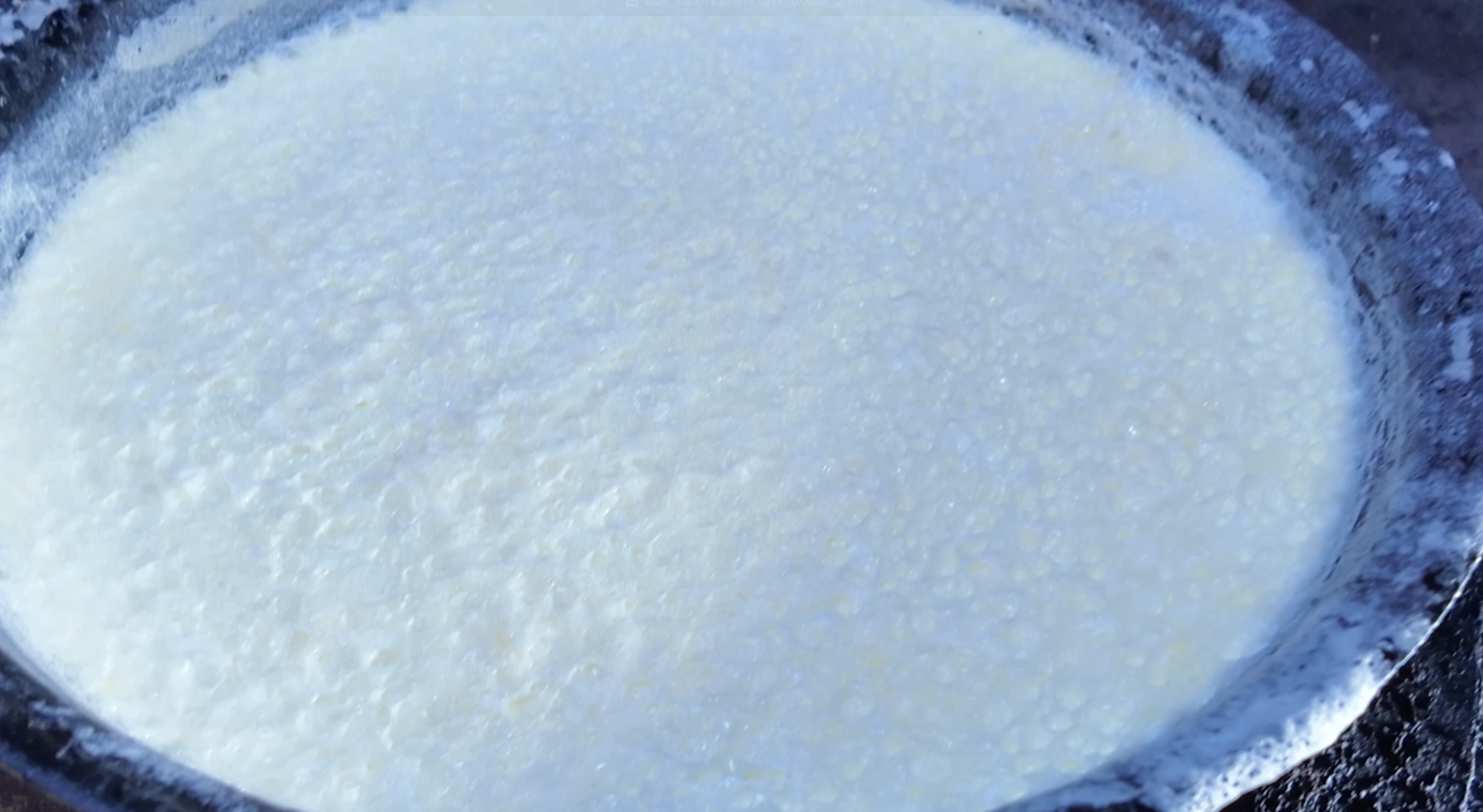
Pot of unfinished urum
Traditionally, urum is consumed without added sugar or flavoring. It is commonly eaten alongside milk tea, fried dough, or grains such as millet. In contexts of scarcity, it may be eaten on its own as a primary source of nutrition. Its role within the diet is functional rather than decorative, providing warmth and energy necessary for survival in harsh environmental conditions.
In contrast, contemporary online representations often frame urum as a novelty ingredient. Social media videos emphasize visual appeal and innovation, presenting urum as a base for sweetened desserts or fusion dishes. While such adaptations increase visibility, they frequently detach the product from its original ecological and cultural context.
Urum developed in response to the demands of pastoral life on the Mongolian grasslands, where food preservation, caloric density, and seasonal resilience are essential. Understanding urum therefore requires attention not only to its composition, but also to the environmental conditions and subsistence practices that shaped it. Without this context, its transformation into a trend risks obscuring its original purpose as a sustaining food rather than a culinary innovation.
